Quick summary
- Dubai's sea averages 28 °C (82 °F) over the year, from 22 °C (72 °F) in January to 33 °C (91 °F) in July, August and September.[1]
- The best window for being along the Persian Gulf is November through March, when daily highs run from the low 70s to the mid-80s.[2]
- January has the highest average relative humidity at 65%. May has the lowest, at 53%.[3]
- The superyacht tour from this site runs 3 hours with a live DJ, a swim stop and an open bar, from US$126.[4]
- The same listing holds a 4.83 rating from 4,029 reviews and offers free cancellation up to 24 hours in advance.[4]
| Winter, Nov to Mar | Summer, May to Sep | Shoulder months | |
|---|---|---|---|
| Sea temperature | 22 °C in January[1] | 33 °C in July to September[1] | 28 °C yearly average[1] |
| Air | Daily highs low 70s to mid-80s[2] | Hot, sail late in the day | Warm days, softer evenings |
| Humidity | January averages 65%[3] | May averages 53%[3] | Between the yearly high and low |
| Evenings | Early sunset, take a layer | Late sunset, stay on deck | Long light, cool return |
| Swimming | Cool water in January[1] | Sea at its monthly high[1] | Often comfortable for a dip |
| What to pack | Light layer for the evening | Hat, water, loose cotton | Summer kit plus a layer |
November-March Daily highs range from the low 70s to the mid-80s, making Dubai's winter season the perfect time to sprawl out along the Persian Gulf's pearly white sands.
Verdict: when to book a Dubai yacht trip
Check before booking
- Match your date to the season you want, not to the cheapest slot
- Reserve now and pay later on the superyacht listing
- Check the free cancellation window before you pay
- Look up sunset time for your travel dates before picking a departure
On the day
- Take a light layer for winter evenings on the water
- Arrive early at the marina, boarding starts before departure
- Carry a card for extras, the open bar is part of the tour
- Tell the operator about mobility needs when you book
What decides a Dubai yacht day
Dubai sits on the Persian Gulf, and the water here stays warm enough for a swim for most of the year. The average sea temperature across the year is 28 °C (82 °F).[1] That is why so many Dubai yacht listings build a swim stop into the route, and why the real question is not whether the sea is pleasant but how the air feels on deck and how late you want to be out on it.
Air is the bigger variable, and it changes a lot between seasons. November through March is the best window for being along the Persian Gulf, when daily highs range from the low 70s to the mid-80s.[2] Push into summer and the heat climbs while the humidity actually drops away: May averages the lowest relative humidity of the year at 53%.[3] That combination is what decides whether a cruise feels like a holiday or an endurance test.
In practice that gives you two quite different trips. In the cool months you want a daytime or sunset run, with a light layer for the ride back to the marina. In the hot months you want a late departure, an open deck for the breeze and a swim stop in water that has been warmed all day. Neither is better than the other; they simply feel like different holidays, and both show you the same towers from the same water.
Winter, November to March
This is the stretch most people picture when they think about a Dubai yacht trip: warm sun, comfortable evenings and a sea at its coolest. The average sea temperature in January is 22 °C (72 °F), the low point of the year.[1] January also carries the highest average relative humidity, at 65%, so mornings can feel damp before the breeze picks up.[3] Days are easy, and being outside on a deck feels like a treat rather than a test.
You can sit on the bow in a t-shirt, watch the towers slide past and take photographs without squinting into haze. Once the sun goes down, though, the breeze off the water has a bite to it. Pack a jumper or a light jacket for the return leg and for the short walk back to the car park, and you will enjoy the second half of the evening far more.
Sunset comes earlier than it does in summer, which suits the classic routine: sail in the golden hour, watch the skyline switch its lights on, and be back at the marina while the evening is still young. Evening departures are the ones people ask for at this time of year, so if your dates are fixed, book early rather than leaving it to the last week, and read the cancellation terms before you pay.
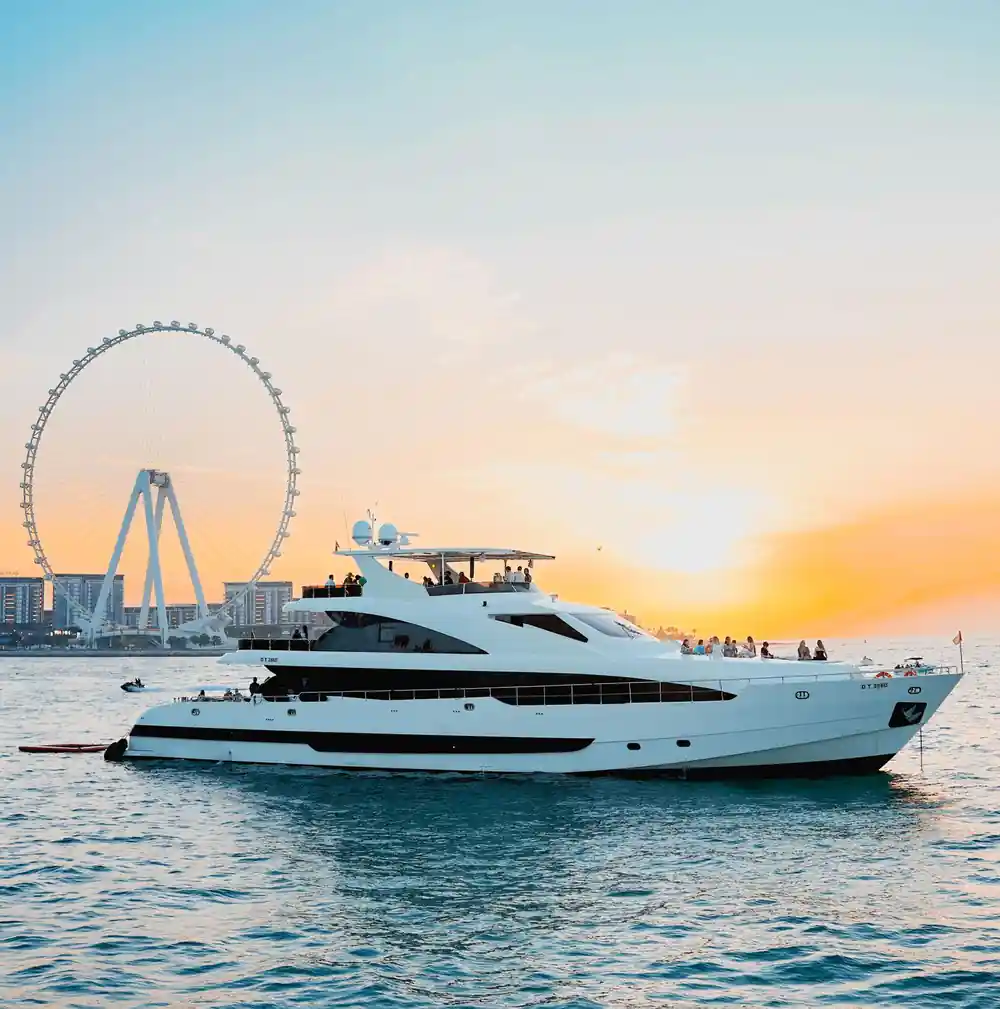
Guests spread across the bow as the superyacht turns toward the Dubai skyline.
Summer, May to September
Summer in Dubai is hot on land and warm on the water. The sea reaches its monthly high of 33 °C (91 °F) in July, August and September.[1] That is bath-warm water, and a swim stop stops being a way to cool down and becomes the reason you booked in the first place. Humidity is at its yearly low in May, 53%, so early summer can feel less sticky than visitors expect.[3]
The sensible pattern is to sleep in, stay indoors through the middle of the day, and take a late afternoon or evening cruise. Summer sunsets come late and take their time, the light on the towers turns gold, and the heat lifts as the boat clears the breakwater. Shade, water and a hat matter far more now than they do in winter, and a loose cotton shirt beats a tight one every time.
Keep in mind that air temperature and sea temperature are two different things. The air can be punishing while the water is lovely, so build the day around shade and swimming rather than around a fixed schedule. If you burn easily, a long-sleeved top and a cap do more good on deck than a towel over the shoulders, and a bottle of water in your bag is never wasted.
The shoulder months
The months between the two extremes bring warm days and gentler evenings than high summer. The published averages only give the top and bottom of the range: 22 °C (72 °F) in January and 33 °C (91 °F) in July, August and September, with a yearly average of 28 °C (82 °F).[1] Everything else sits somewhere between those two points, which is exactly what a shoulder month feels like.
For many travellers these weeks are the sweet spot. The water is warm enough for a proper swim, the air is not yet punishing, and the light in the late afternoon is soft enough to flatter the skyline. Shoulder season also tends to be easier to book at short notice, so a spontaneous decision is less likely to leave you standing on the quay watching someone else's boat head out.
Pack for both ends of the day: shorts and a t-shirt for the afternoon, a thin layer for the evening, and shoes that slip off easily if your tour includes a swim stop. Sunscreen is a year-round item here, and so is a refillable water bottle. A dry bag for phones and cameras is a small thing that saves a lot of grief on a boat.
from US$126
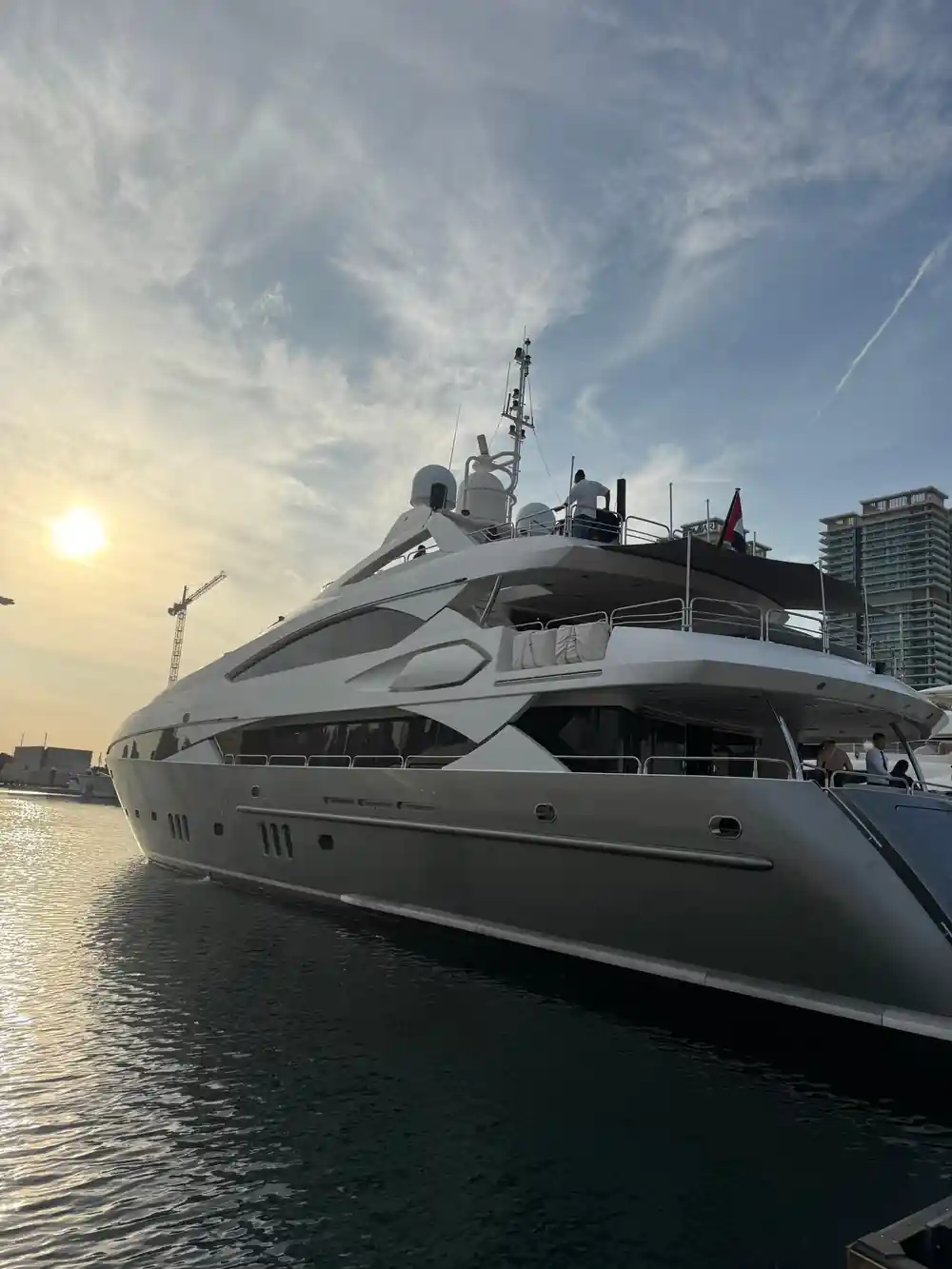
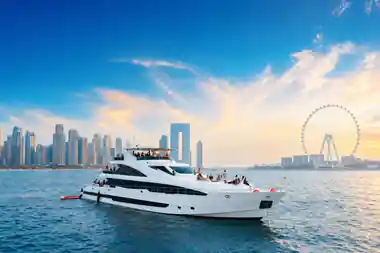
The superyacht tour booked from this site runs 3 hours from Dubai Harbour, with a live DJ, a swim stop and an open bar.[4]
Which departure to book
Departure time changes a trip more than the month does. A midday sailing in the cool months is bright and breezy; the same slot at the height of summer is fierce. A sunset sailing works either way, with low light, a cooler ride home and the skyline at its most photogenic. If you can only control one thing about your booking, control the hour rather than the date.
The superyacht tour booked from this site runs for 3 hours and starts at one of 2 starting location options. It calls at Dubai Eye, Atlantis, Dubai and Atlantis The Royal, and finishes at 2 drop-off locations. There is a live tour guide in English and an optional audio guide in English, and the listing is rated 4.83 from 4,029 reviews at a from-price of US$126.[4]
If you want a shorter or cheaper taste of the water, there are listings that cover everything from a canal cruise to a sunset sail to a party yacht. Compare the from-prices and the duration side by side, then match the trip to the way you actually want to spend the day: swimming, eating, dancing or simply looking back at the city from the sea.
When the skyline looks best
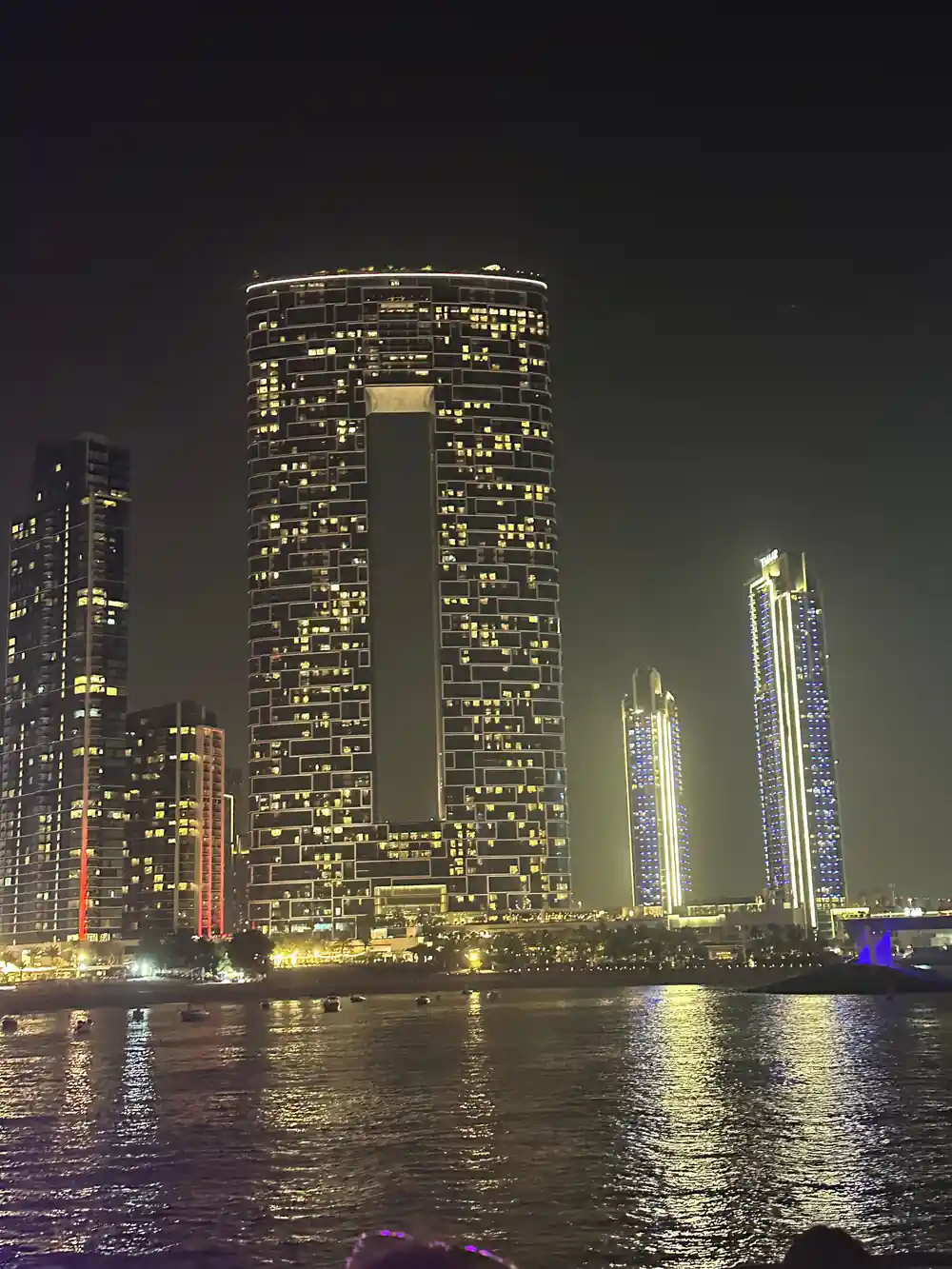
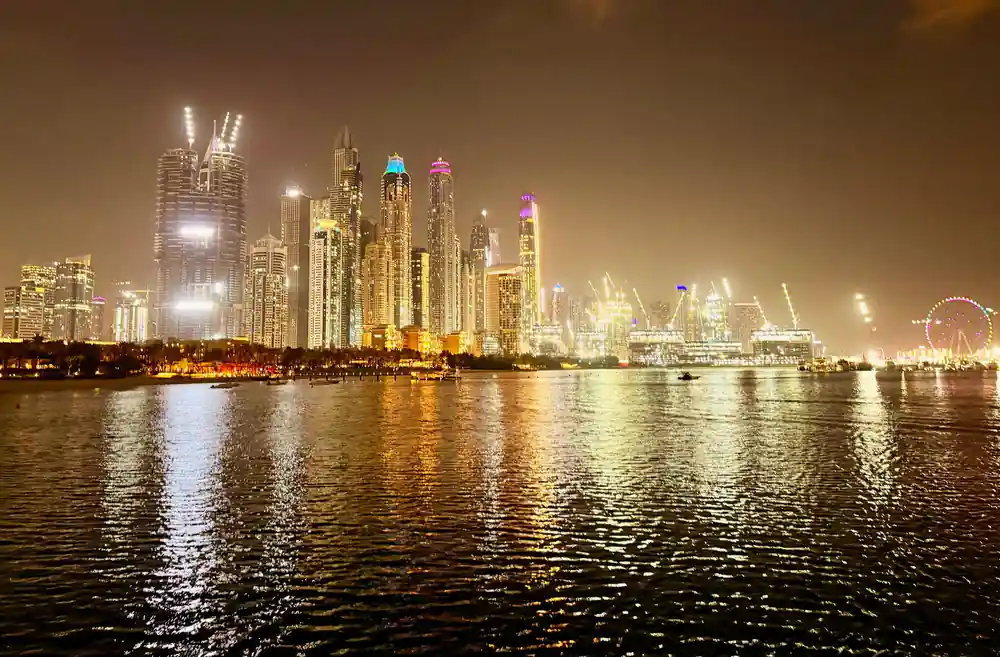
The skyline reads differently at every hour. Midday gives hard, clear light and plenty of detail in the towers. Late afternoon softens the facades and brings out the colours. Sunset and the half hour after it are when the buildings start to glow and the water picks up the same tones, which is why so many people plan their cruise around that window.
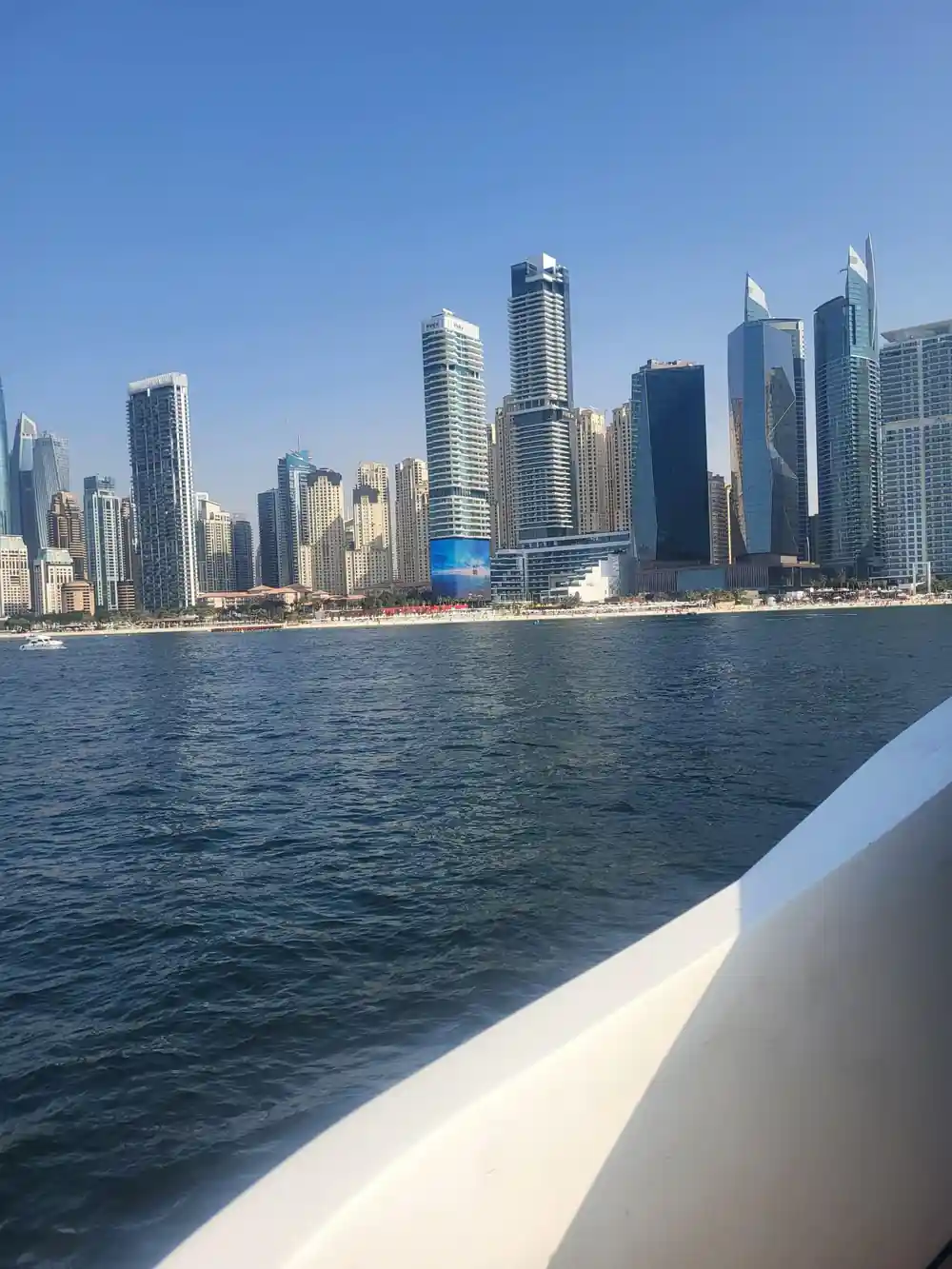
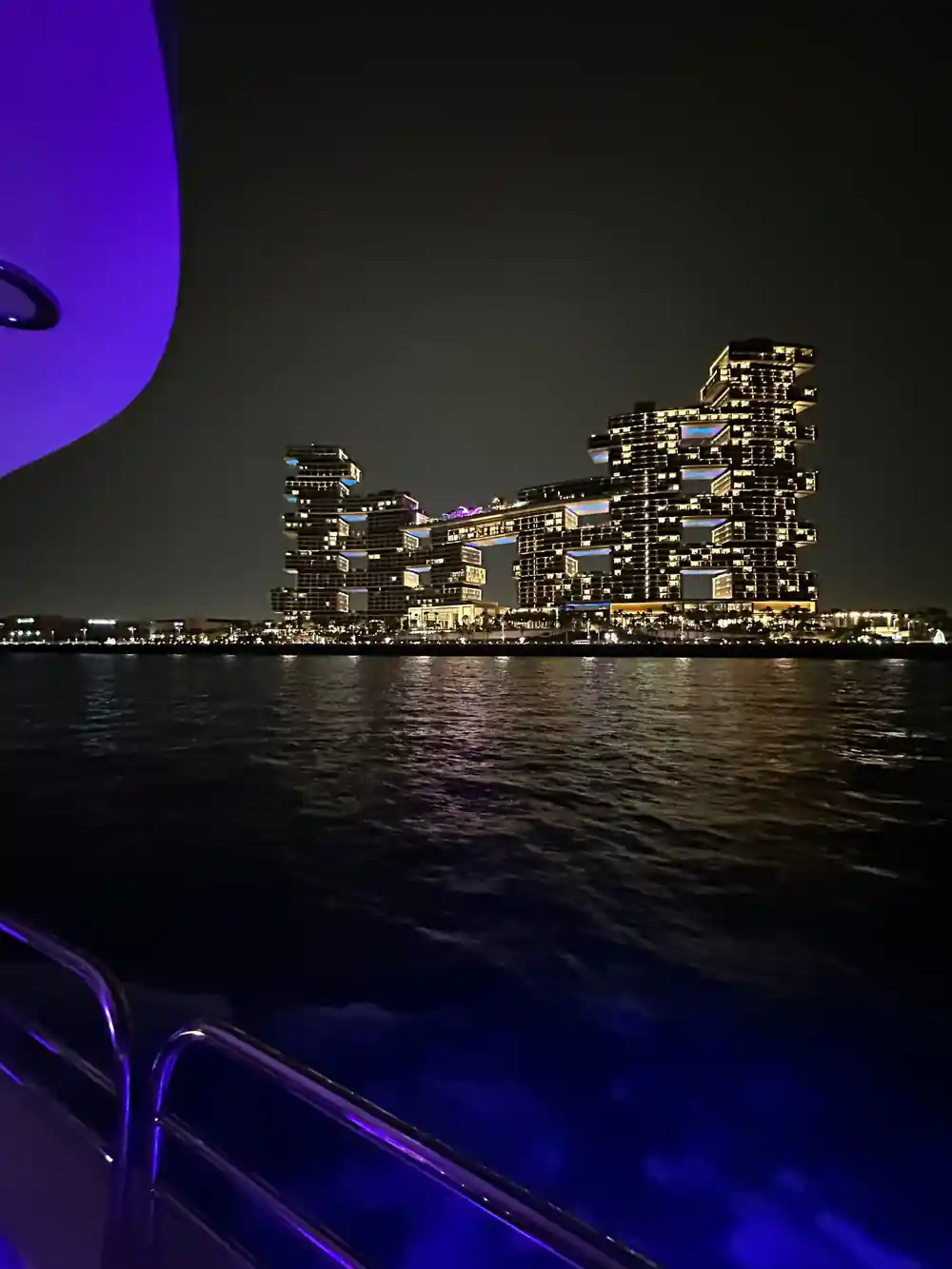
The superyacht route passes Dubai Eye, Atlantis, Dubai and Atlantis The Royal, so one cruise takes in the wheel, the palm and the resort strip in a single run.[4] Landmarks photographed from the water look best while there is still light in the sky behind them, so aim for golden hour rather than full dark if pictures matter to you. A phone in a waterproof pouch is enough for most people.
Winter sunsets come earlier and summer ones later, which shifts the whole evening on board. On a hot day a late sailing also means you are on deck after the worst of the sun has gone, with the city lighting up around you as you head back in. In winter the same trip ends earlier, leaving the rest of the night free for dinner.
Does weather ever change the route
Captains watch wind and swell closely, and a route or a swim stop can be adjusted on the day. That is normal on the water and it is not a sign of a badly run trip. Dubai's coastline is sheltered and the annual average sea temperature is 28 °C (82 °F),[1] so the boat is rarely fighting the sort of conditions that cancel a sailing outright.
A stiff breeze still changes how the outer legs feel, especially on the way back when you are heading straight into it. If you are prone to seasickness, choose an evening when the wind is light, sit toward the middle of the boat and keep your eyes on the horizon rather than on your phone. Eating something plain before you board also helps.
Keep your plans loose. The superyacht listing has free cancellation up to 24 hours in advance for a full refund, and you can reserve now and pay later, so a change in the forecast does not have to cost you the day.[4] Build a spare evening into a short trip if cruising is the centrepiece of it.
Average sea temperature in Dubai
Dubai's sea temperature in the coolest month, in the warmest months and across the year, as published by Dubai Online.[1]
From-prices for Dubai yacht tours
When to sail in Dubai
Plan your yacht date
Check the season
Decide first whether you want cool air and cooler water or warm air and a bath-warm sea, then work out the month from there.
Pick the hour
Sunset departures give the best light and a cooler ride home, while midday suits a winter trip with swimming on the plan.
Choose the trip
Party yacht, sunset sail or private charter: match the boat to your group and to how much time you have on the water.
Book early
Popular evening departures in the cool months go first, so lock your date and keep the cancellation option open.
Pack light
Sun cream, a hat, a light layer for the return leg and shoes you can slip off for the swim stop.
Pick your date on the superyacht with the live DJ
from US$126Reserve now & pay later