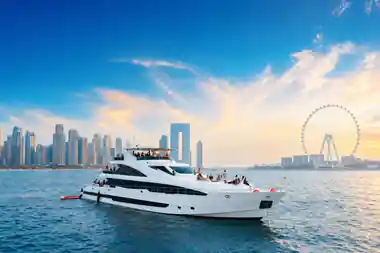
Quick summary
- Non-marking boat shoes or white-soled trainers keep you on the crew's good side and are easy to slip off when the deck gets wet.
- Carry the same photo ID you used to book; boarding checks it, and a photo on your phone is rarely accepted.
- A superyacht has sun, shade, and air-conditioned lounges; a light layer lets you move comfortably between all three.
- Year-round sea temperatures around 28 °C (82 °F) make the water tempting, but UV is the bigger issue: hats, sunscreen, and sunglasses are non-negotiable.[1]
- Wear your swimsuit under your clothes and bring a quick-dry towel; the open-bar superyacht tour includes a swim stop.[2]
| Superyacht DJ tour | Sunset cruise | Marina breakfast tour | |
|---|---|---|---|
| Duration | 3 hours[2] | 1 - 2 hours[3] | 1 - 3 hours[4] |
| From price | from US$126[2] | from US$23[3] | from US$25[4] |
| Rating | 4.83 from 4,029 reviews[2] | 4.65 from 4,859 reviews[3] | 4.73 from 21,960 reviews[4] |
| Highlights | Live DJ, swim stop, open bar | Sunset views, snacks and drinks | Breakfast or BBQ options, live guide |
The average sea temperature throughout the year is 28 °C (82 °F), ranging from a low of 22 °C (72 °F) in January to a high of 33 °C (91 °F) in July, August, and September.
Dress for the water, not just the skyline
On board
- Bring photo ID - it will be checked at boarding
- Arrive early so boarding feels calm
- Use high-SPF sunscreen even on cloudy days
- Pack a light layer for the sea breeze
In your bag
- Keep booking confirmation on your phone
- Small cash or a card for tips and extras
- Dry bag for phone, keys, and ID
- Consider hotel transfer if you don't want to drive
The shoes rule, and how to work with it
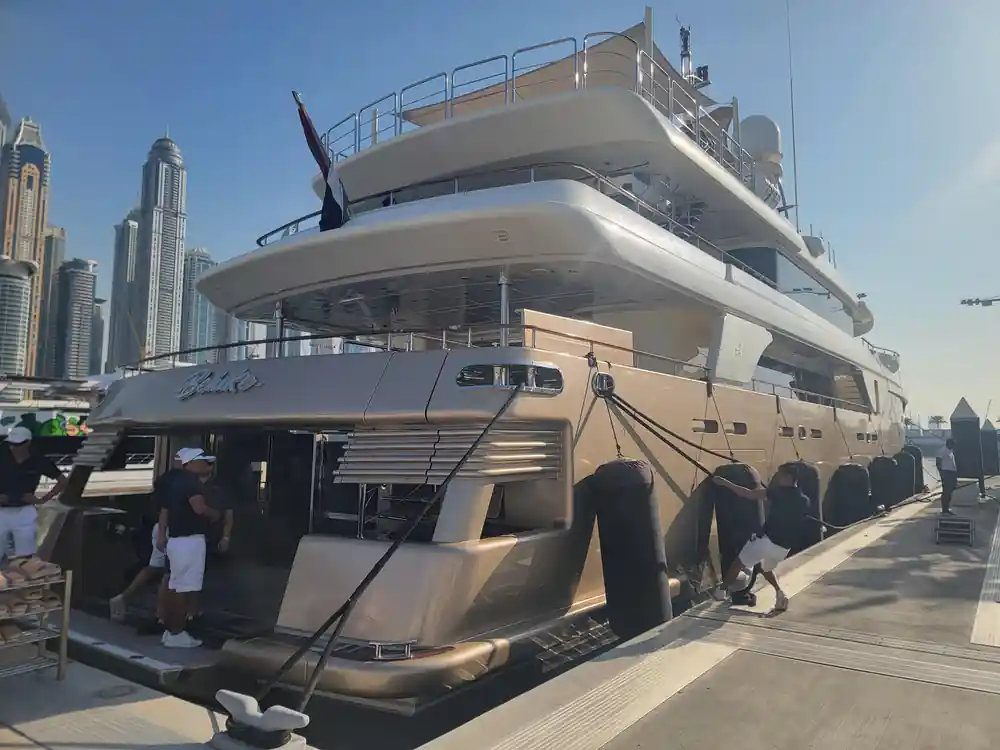
Yacht crews care about the deck. Black-soled shoes can leave scuff marks, and on a bright white superyacht that is a small disaster. The simple workaround is a pair of boat shoes or light trainers with white soles. If the sea breeze picks up, you will also be grateful for a secure grip. On a three-deck boat you will climb stairs between levels, so a shoe with a little traction is worth more than a stylish heel. Look for something you can also wear with bare feet, because a lot of passengers simply slip their shoes off after boarding. Once you are onboard, the crew will often point out the areas where shoes are not allowed, usually the sundeck and any part with a polished floor. Keeping your footwear in a small tote makes it easy to swap between walking shoes and flip-flops without holding up the others in your group.
The same shoes rule applies to the marina before you even board. You may walk through a crowded promenade to reach your yacht, so you want shoes that are easy to walk in and quick to take off. If you are not used to the heat, the deck itself can be warm underfoot, especially in summer. A pair of light, breathable shoes is usually better than heavy trainers. If you bring flip-flops, keep them for the swim stop and the return to the marina. On the way back, your feet may still be wet, so a pair of easy slip-ons will feel a lot better than lace-ups. You do not need to buy new footwear for the trip; a clean pair of white-soled trainers you already own will do the job.
Identification, which is not optional
Boarding a yacht in Dubai means your booking details and ID need to match. Your passport, Emirates ID, or driving licence will work, as long as it is the same document you used when you reserved. Do not rely on a photo on your phone; crew members usually want to see the physical card. This is not a formality. Security staff at the marina and the yacht's captain both need to confirm that the person on the ticket is the one walking up the gangway. If you have added an optional hotel pickup, the same ID will be checked at the pickup point, so keep it in an easy-to-reach pocket rather than buried in a bag. If you are from outside the Emirates and your passport is your only ID, keep it in a waterproof holder around your neck or inside your day bag.
Some travellers worry about carrying a passport while swimming. The better approach is to bring a photocopy or a digital copy of your passport if your hotel is comfortable with that, but tour operators generally want the original document. A waterproof phone pouch or a small dry bag keeps your ID on you without getting wet. Slip the pouch into your swimsuit pocket or around your neck while you are in the water. Keep the main document in your dry bag and take only a quick-dry pouch to the swim stop. The crew will understand that you want to keep it dry; they see the same uncertainty on every sailing. Look for a bag with a lanyard so you can keep both hands free for the rail and the rope.
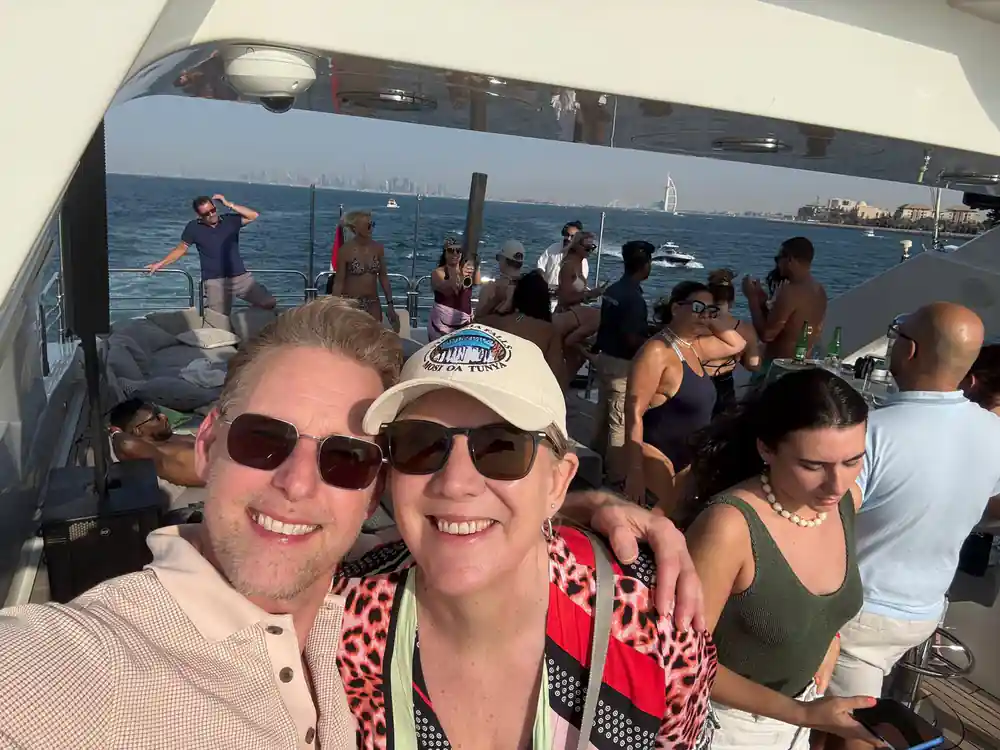
Dressing for the deck means planning for sun, sea breeze, and the swim stop
Dressing for three decks at once
A superyacht is not one temperature. The bow is open to the sun, the main deck is partly shaded, and the lounge is air-conditioned. In winter, daily highs reach the low 70s to mid-80s °F.[5] That range is comfortable for a light long-sleeve at the start, but once you find a sunny spot you may want to strip off a layer. Because the boat moves and the sea breeze rises, a simple cotton shirt over a swimsuit is often the most flexible outfit. The sea breeze is a constant on the water. Even on a calm day, the wind is stronger than it looks from shore, especially if the captain opens up the throttle. A thin windbreaker or a linen overshirt can be pulled on without getting in the way. If you plan to sit at the back and watch the wake, keep a long-sleeved layer ready and a pair of sunglasses to block the spray.
The decks themselves vary. The lower deck may be enclosed with glass, while the sundeck has open railings. You will move between these areas throughout the tour, particularly when the live DJ is playing and people move up to dance. Dressing in layers means you can join in without overheating. Choose natural fabrics that breathe: cotton, linen, or quick-dry synthetics. Steer clear of heavy denim, which feels sticky once the sun climbs and takes an age to dry after the swim stop. A linen shirt or a loose cotton cover-up over your swimsuit is the kind of outfit that gets you from the marina bar to the sundeck without a second thought. If you are bringing a light jacket, check that it can be rolled into a small pouch; space on a three-hour boat trip is limited.[2]
Sun, which is the actual hazard
The water around Dubai averages 28 °C (82 °F) across the year.[1] That sounds beautiful, but the same sun that warms the sea is the real threat. Even in November through March, when the winter sun is pleasant, you need sunglasses, a hat with a brim, and a high-SPF sunscreen.[5] The reflection off the water is fierce, so pay attention to your chin, ears, and the back of your neck. A rash vest or UV top gives simple, reliable coverage when you are in the water. Choose a sunscreen labelled broad-spectrum and water-resistant, because you will likely be in and out of the water. Rub it in before you step on the boat, and set a reminder on your phone to reapply after an hour, or as soon as you get out of the sea.
Reapply sunscreen after the swim stop and keep a lip balm with SPF in your pocket. The sun in the Gulf sits low in the sky during the winter, which can catch you under the chin and around the eyes. A broad-brimmed hat is better than a baseball cap because it shields your ears and the back of your neck. Sunglasses with polarised lenses cut down the glare off the water and help you pick out landmarks like Burj Al Arab and Ain Dubai as they pass by. If you wear contact lenses, remember that salt spray and sunscreen can irritate your eyes; a spare pair of glasses in your dry bag is a small insurance policy. And do not forget the tops of your hands and the back of your legs while you are stretched out on a lounger.
from US$126
Plan your Dubai yacht look with layers, sun protection, and slip-off shoes.
For the swim stop
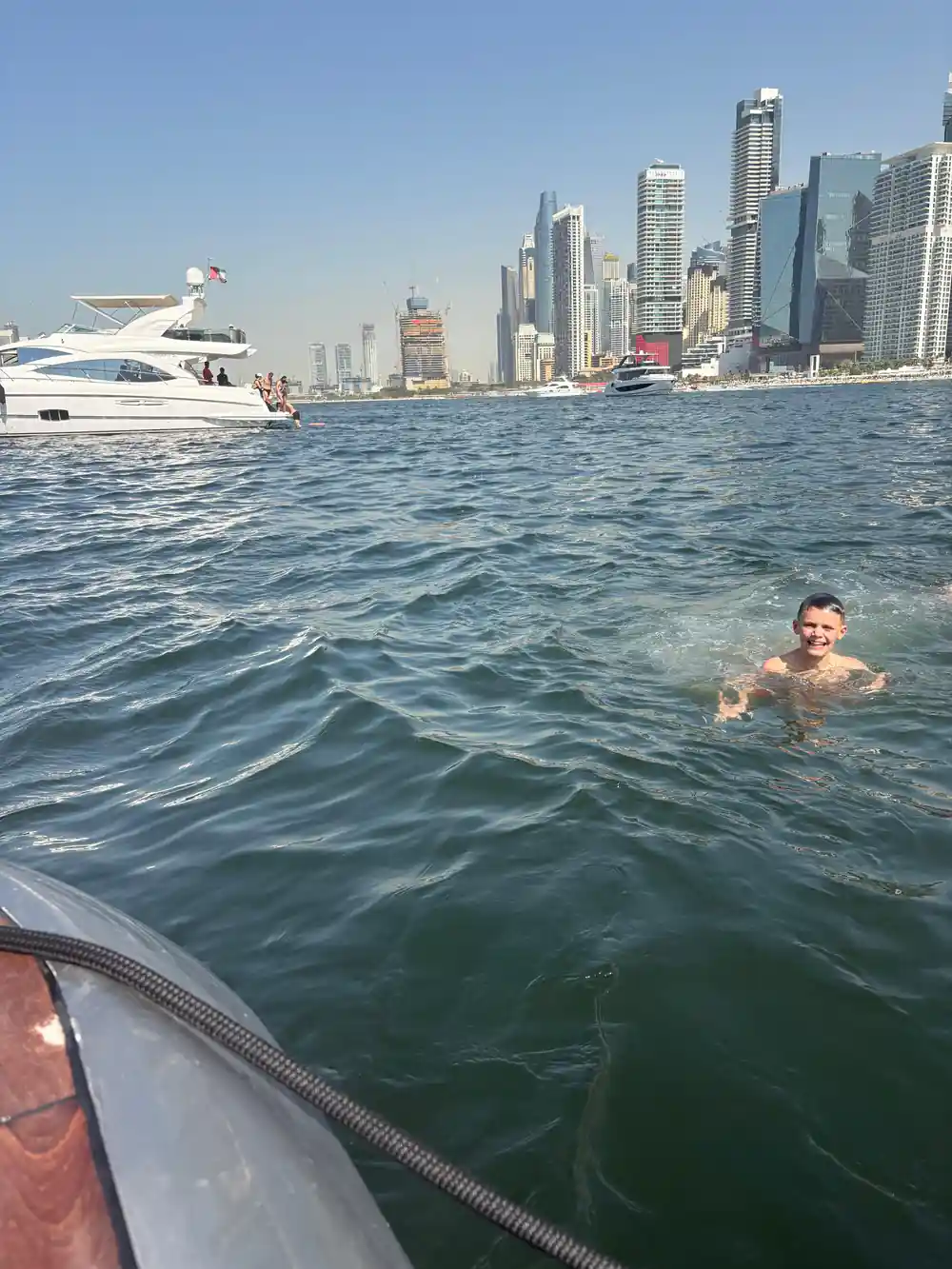
The tour's name promises a swim, and you will want to be ready. The easiest move is to wear your swimsuit under your clothes from the start. That way, when the yacht stops near a calm stretch of water, you can strip off your cover-up and jump in without waiting for a changing room. It also saves you from carrying a separate bag for swimwear. If you are comfortable being in a swimsuit for the whole cruise, you can simply wear it as a layer. Once the anchor drops, the crew will usually give you a clear signal and a little time before they open the ladder or the platform. Use that pause to apply extra sunscreen, take off your watch, and tighten any jewellery so it does not slip.
Take a small towel or a quick-dry travel towel, and a dry bag for your damp things. If you plan to swim, choose a swimsuit that stays in place when you hit the water; board shorts and a bikini that you trust work better than something purely for sunbathing. Your shoes should be off before the swim stop, so keep them in your tote. A beach cover-up is useful when you get out, especially if the wind picks up. There may not be a dedicated changing area on every boat, so a large scarf or sarong gives you quick privacy. If you are not a strong swimmer, stay close to the boat and ask the crew where the ladder is. This is a fun stop, but the deep sea is no place for a hero.
Money and the bar
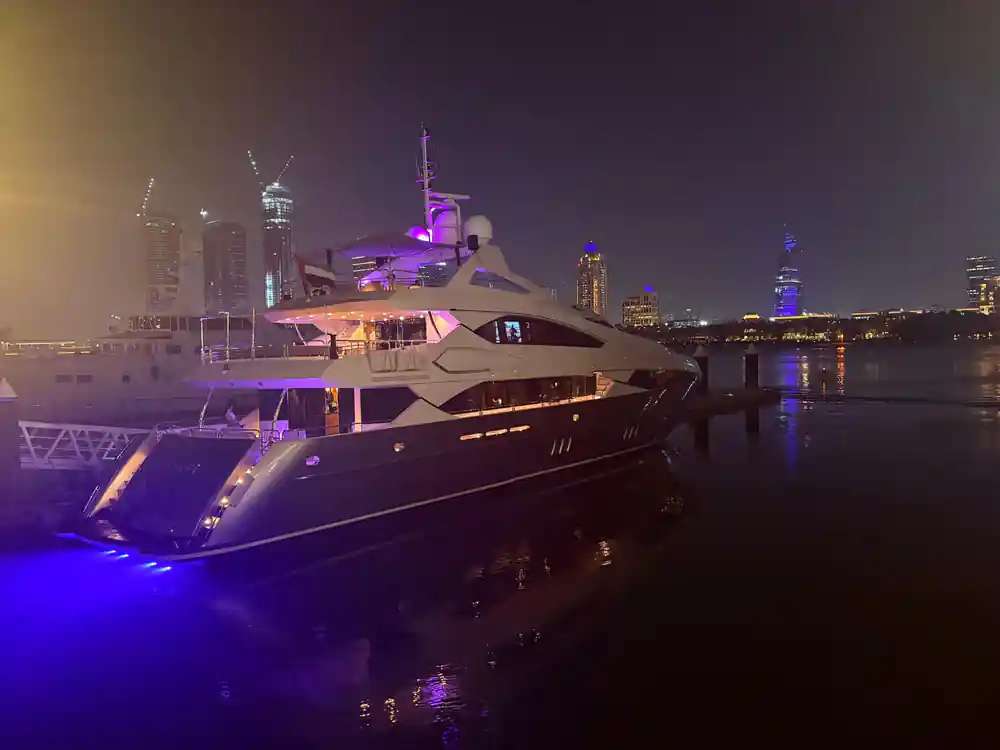
The tour is listed as a Luxury Superyacht Tour with Live DJ, Swim & Open Bar.[2] That means the party, the swim stop, and the bar service are all part of the experience. To make the most of it, plan for a few hours on the water with little need for cash. The boat will likely have a photographer or an optional upgrade, but you are not obliged to buy anything. A small amount of cash or a card is still useful for tipping the hardworking crew, even when the service itself is covered. You might also want to rent a locker if one is offered, or grab a souvenir at the end. None of these are required, but a little money in a zip pocket gives you the option.
Before you board, it is a good idea to leave unnecessary cards and large bills at the hotel. You do not want to be fishing through your pockets when the boat is about to leave. A slim cardholder or a note in a zip inside your tote is enough. If you are planning to drink, remember to hydrate; the Gulf sun and sea breeze can creep up on you, and water should be part of your plan even with an open bar. Order a bottle of water from the bar and alternate it with a cocktail or a soft drink. The crew can also point out the nearest spot for ice and mixers, so you are never left queuing.
What to leave at the hotel
A superyacht has limited passenger storage, so a small day bag is your best friend. Leave large cameras, big tote bags, and unnecessary documents in the hotel safe. A compact crossbody or waist pack is enough for your phone, lip balm, ID, and a little cash. If you must bring a camera, only take one lens and keep it in a pouch. The boat will be moving, and gear can easily slide or get splashed. Consider a waterproof case or a simple dry bag rather than a padded camera bag, which takes too much space. Your fellow passengers will thank you for not covering the deck with a huge backpack.
You will also want to leave behind valuables you do not need. The marina is a busy public space, and even a short stop before boarding is easier when your pockets are light. Remember that the swim stop means wet clothes, so make sure anything you leave in the bag is either waterproof or in a dry pouch. Your hotel key, a book, and a change of underwear are fine to bring, but keep them sealed. This way, you can enjoy the full three hours without worrying about your belongings.[2] If you are travelling as a group, assign one person to hold the shared items, and keep your own essentials in a separate zip pouch.
Compare tour prices
When to set sail
How to dress
Start with swimwear
Wear your suit under clothes; the swim stop can come up quickly.
Add light layers
A cotton top, linen shirt, and thin jumper cover you from deck to lounge.
Choose slip-off shoes
Boat shoes or white-soled trainers are practical; keep them easy to remove.
Pack sun kit
Sunglasses, hat, high-SPF sunscreen, and a light towel in a dry bag.
Bring ID and booking
The same ID you booked with will be checked at boarding.
Ready to see the skyline from the water?
from US$126Reserve now & pay later